

The strange thing about Meta ads in 2026 is this:
A brand can spend ₹40 lakhs on media buying and still look small.
Not because the targeting failed. But because the communication did.
You can see it instantly now. A person scrolls past an ad in under a second, but something already happened in that moment. The brain categorized the company. Serious. Forgettable. Desperate. Reliable. Generic. Cheap. Trustworthy.
Most advertising discussions still happen around CPMs, hooks, funnels, and targeting layers.
Meanwhile the actual issue is sitting quietly inside the creative itself.
The platform has evolved faster than most companies realize.
Meta no longer behaves like an ad distribution tool. It behaves like a behavioral filtering system. It studies hesitation. It studies pauses. Rewatches. Silent curiosity. Tiny retention spikes people never notice manually.
That changes the economics of brand communication completely.
And suddenly the companies winning are not necessarily the loudest ones.
They are the ones producing stronger viewer behavior.
Here are the key strategies every brand needs to pay attention to right now:
People Still Pay Attention. Your Ads Just Give Them No Reason To.
Brands love saying audiences have “short attention spans.”
That explanation is comforting because it removes responsibility from the communication.
But look carefully at what actually survives online.
People still watch:
- 3-minute founder interviews
- mini documentaries
- podcast clips
- athlete profiles
- customer transformation videos
- emotionally loaded or funny product launches
- behind-the-scenes manufacturing footage
Attention did not disappear.
Low-conviction communication became easier to detect.
The reality is that people still willingly spend time with content that teaches them something, makes them laugh, helps them solve a problem, or feels relatable enough to share with someone else. The challenge is not attention scarcity. The challenge is giving people a reason to care.
That is a very different problem.
A surprising number of brands still produce Meta ads like digital billboards:
- logo
- product
- offer
- CTA
- done
Technically correct. Commercially weak.
Especially in industries where trust carries financial weight:
- healthcare
- insurance
- finance
- education
- luxury housing
- SaaS
- consulting
People are not just evaluating products anymore.
They are evaluating operational confidence, credibility, and relevance. More importantly, they’re asking themselves whether the content is giving them something valuable. Is it answering a question? Making them feel something? Reflecting a situation they recognise?
That is why simply listing USPs is no longer enough. The message still matters, but it needs to be packaged in a way people genuinely enjoy watching. Attention is no longer won through information alone. It is won through engagement.
That is why the best Meta ad strategy for brands in 2026 begins much earlier than campaign launch day.
It begins during video development itself.
Most Brands Are Feeding Meta the Wrong Creative Signals
A lot of marketing teams still think video quality is mostly about aesthetics.
It is not.
Good advertising videos influence platform behavior.
That distinction matters.
Meta’s systems now reward content that creates:
- longer watch duration
- delayed scrolling
- replay behavior
- comment intent
- profile curiosity
- save-worthy relevance
- sequential viewing
Weak creative damages distribution quietly.
No alert appears in Ads Manager saying:
“Your video lacks emotional tension.”
“Your pacing collapsed at 7 seconds.”
“Your framing feels commercially generic.”
But the algorithm notices.
Immediately.
This is exactly why performance marketing and production quality can no longer operate separately.
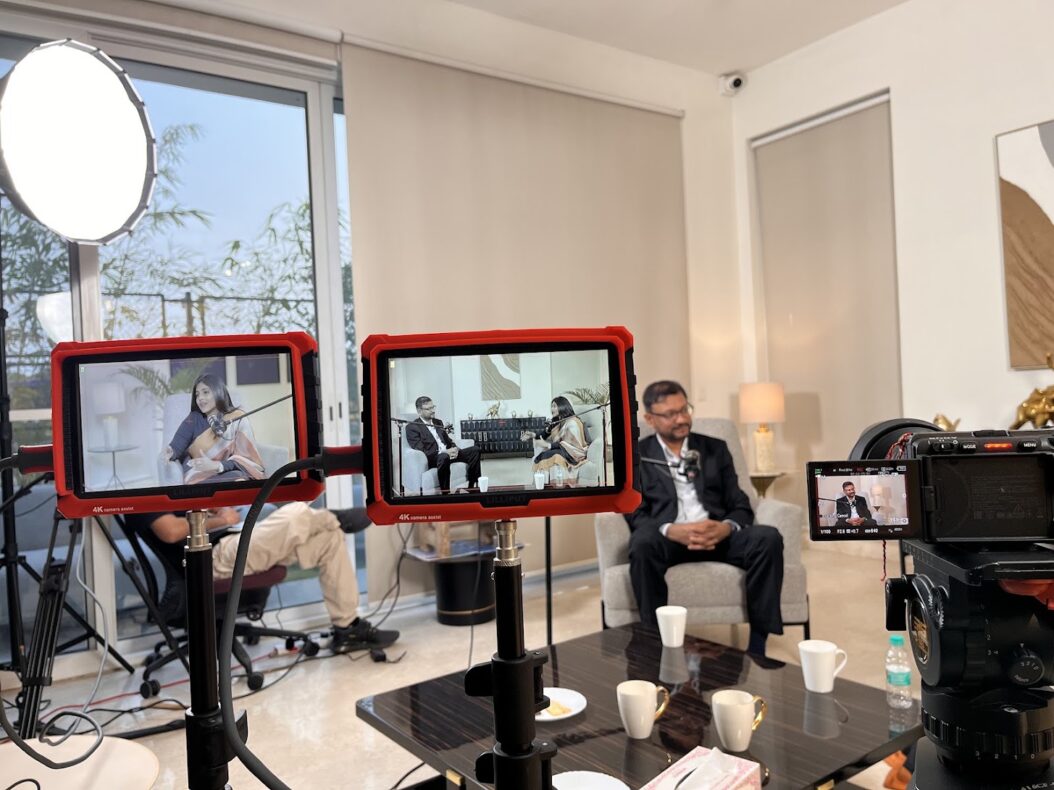
The strongest campaigns coming out of a video production company based in Gurgaon today are being built with retention psychology already embedded into the scripting, visual structure, edit pacing, and audience flow.
Not after the shoot.
Before it.
Why Single-Ad Thinking Is Breaking Modern Campaigns
One polished ad used to be enough.
Now it creates exhaustion.
The brands growing aggressively on Meta in 2026 are building layered video ecosystems instead of isolated campaigns.
Different videos solving different friction points.
One video creates intrigue.
Another establishes operational credibility.
Another reduces hesitation.
Another reassures.
Another explains category complexity without sounding defensive.
The shift is subtle, but commercially massive.
Because buyers rarely convert from information alone anymore.
They convert from accumulated familiarity.
That is where cinematic communication becomes commercially valuable far beyond aesthetics.
A carefully built video can compress months of uncertainty into ninety seconds of perceived confidence.
Especially for sectors where skepticism naturally exists.
Why Retention Has Become More Valuable Than Reach
Reach can be bought.
Retention has to be earned.
And Meta increasingly treats retention like proof of relevance.
This is why short-form edits are dominating advertising performance right now. Not because people suddenly hate longer videos. Because shorter formats create faster behavioral validation.
But there is another mistake brands make here.
They assume short-form means shallow.
Actually, the best-performing Meta campaigns often feel surprisingly restrained.
Less shouting.
Less selling.
Less explanation.
More precision.
A sharp visual.
A controlled line.
A moment that feels observed rather than manufactured.
That subtlety performs better because audiences have developed an instinctive resistance to over-engineered persuasion.
Ironically, this makes high-end execution even more important.
The cleaner the communication, the more believable it feels.
The Future of Meta Ads Looks More Like Entertainment Psychology
The Future of Meta Ads Looks Less Like Advertising and More Like Content People Choose to Watch
For years, brands treated Meta ads as miniature sales pitches. Every second was dedicated to explaining features, benefits, offers, and reasons to buy.
Today, some of the most successful brands are moving in a different direction.
Take Rapido as an example. Much of their content isn’t directly about bike rides, pricing, or app features. Instead, it focuses on relatable moments, humour, cultural observations, and everyday situations people enjoy watching and sharing. The brand remains present through visual cues, colours, vehicles, or subtle integrations, but the primary value comes from entertainment.
This shift reflects a larger change in consumer behaviour. People don’t open Instagram or Facebook looking for advertisements. They open these platforms looking to be entertained, informed, or emotionally engaged.
As a result, the most effective Meta ads increasingly borrow techniques from entertainment psychology.
The best-performing ads often do at least one of four things well:
• answer a question
• create an emotional reaction
• reflect a relatable situation
• spark enough interest that people want to share it
Product benefits still matter. They simply arrive inside a more engaging experience.
They capture attention through curiosity, humour, surprise, tension, or relatability first. Brand messaging comes later.
The question is no longer, “How do we make people watch our ad?”
The better question is, “How do we create something people would willingly watch even if they weren’t planning to buy?”
Brands that understand this distinction are often rewarded with lower acquisition costs, stronger engagement, and better campaign performance because they are working with platform behaviour rather than against it.
The question for marketers is no longer how to make an ad impossible to skip.
It’s how to create content people would choose to watch even if there were no product attached to it.
What Smart Brands Are Doing Differently in 2026
The most effective brands in 2026 are no longer creating content in isolation.
They’re paying close attention to culture, consumer behaviour, platform conversations, surveys, trending topics, and emerging insights, then turning those signals into marketing opportunities.
A recent example comes from the quick commerce space. Instamart released a consumer survey that sparked discussion online. Soon after, Blinkit responded with content that built on the same cultural conversation, transforming an industry insight into a piece of engaging brand communication.
This reflects a larger shift in how modern marketing works.
The strongest campaigns are rarely created from a blank page. They are often created by observing what people are already talking about and finding a relevant brand angle within that conversation.
Consumers engage more naturally with content that feels connected to current culture than with content that appears disconnected from the world around them.
For brands, this means the job is no longer limited to producing content. The job is to identify signals, trends, behaviours, and insights before competitors do, then respond with speed and creativity.
In many cases, the insight becomes more important than the production itself.
The brands winning attention today are not necessarily creating more content. They’re creating content from better observations.
Conclusion
Most Meta ad conversations are still happening at the media-buying layer.
But the real competitive gap has moved elsewhere.
Into perception.
Into pacing.
Into trust behavior.
Into retention psychology.
Into how a brand feels before a customer fully understands what it sells.
That is why the best Meta ad strategy for brands in 2026 is no longer about producing more ads.
It is about producing content that people voluntarily engage with.
Content that answers questions.
Content that creates emotion.
Content that feels relatable.
Content that people would willingly watch even if there were no sales message attached to it.
The brands that understand this shift are not just earning impressions.
They are earning attention.
For the algorithm.
For customers.
For future employees.
For investors.
For everyone quietly evaluating whether the company feels credible enough to trust.
And increasingly, that judgment happens long before anyone clicks.
FAQs
What is the best Meta ad strategy for brands in 2026?
The best Meta ad strategy for brands in 2026 focuses on retention-driven video ecosystems, audience familiarity, trust-building communication, and platform-native creative structures instead of isolated ad campaigns.
Why are cinematic videos important for Meta advertising?
Cinematic videos improve perceived credibility, viewer retention, emotional consistency, and brand recall, which helps Meta distribute ads more efficiently.
How does video retention affect Meta ad performance?
Meta heavily rewards watch duration, replays, pauses, and viewer engagement behavior. Strong retention signals usually improve distribution and lower advertising inefficiencies.
Why are brands investing more in short-form video ads?
Short-form videos align naturally with feed behavior and help brands generate faster engagement validation inside Meta’s algorithmic systems.
What industries benefit most from trust-based Meta advertising?
Healthcare, insurance, finance, SaaS, education, consulting, and real estate brands benefit heavily because customer hesitation directly affects conversion behavior.
Why work with FlowInk Pictures for your next Meta Ad campaign?
A professional video production company based in Gurgaon can help brands create polished, platform-aware video assets designed for advertising performance, trust building, and long-term communication value.