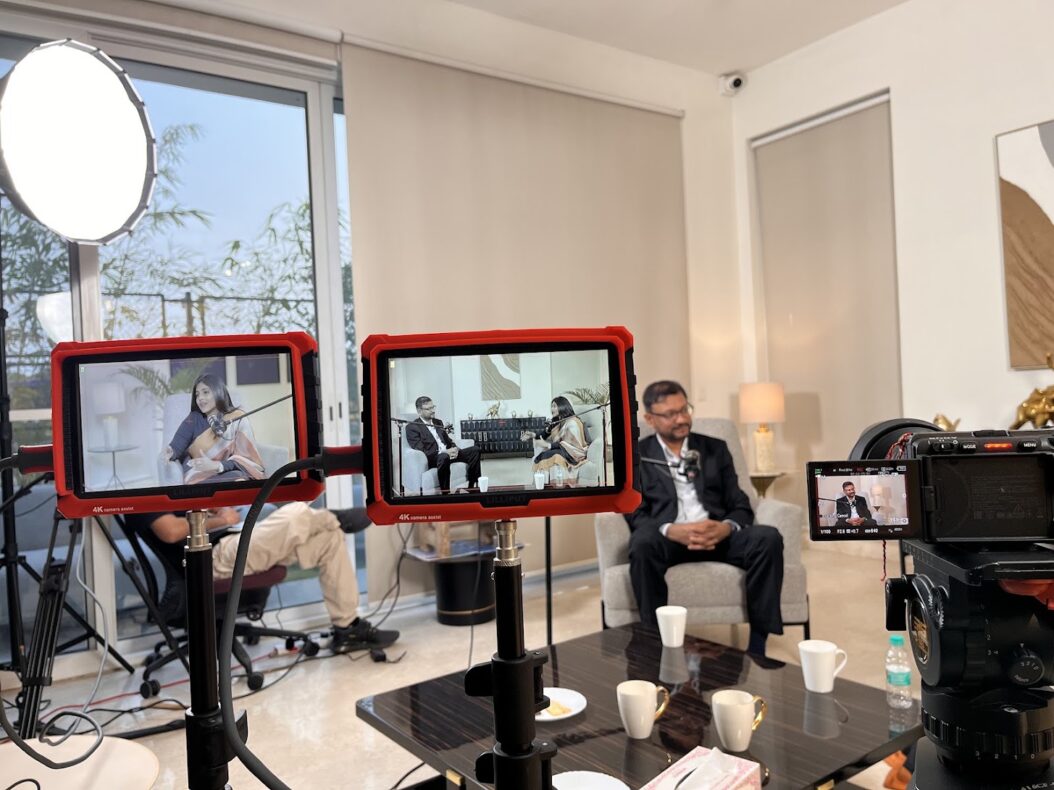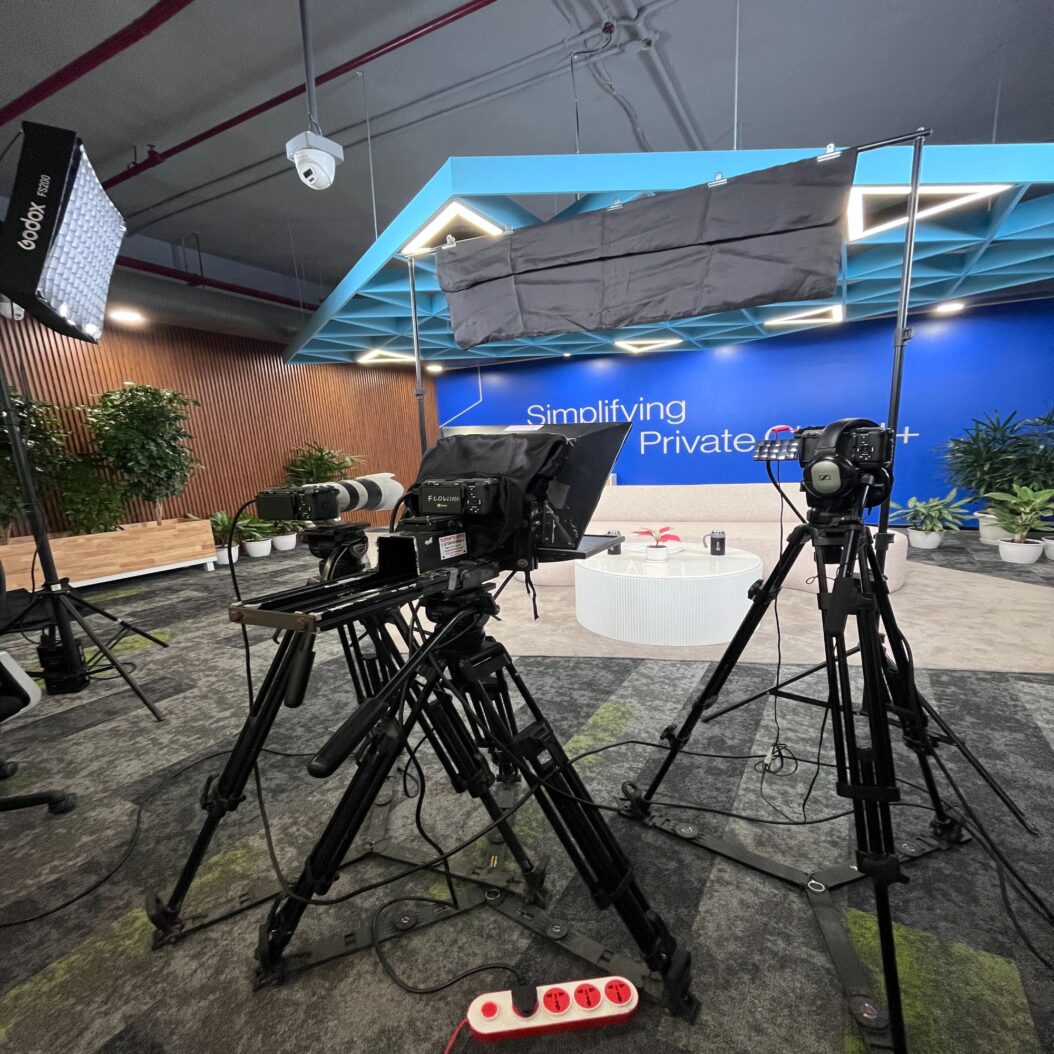

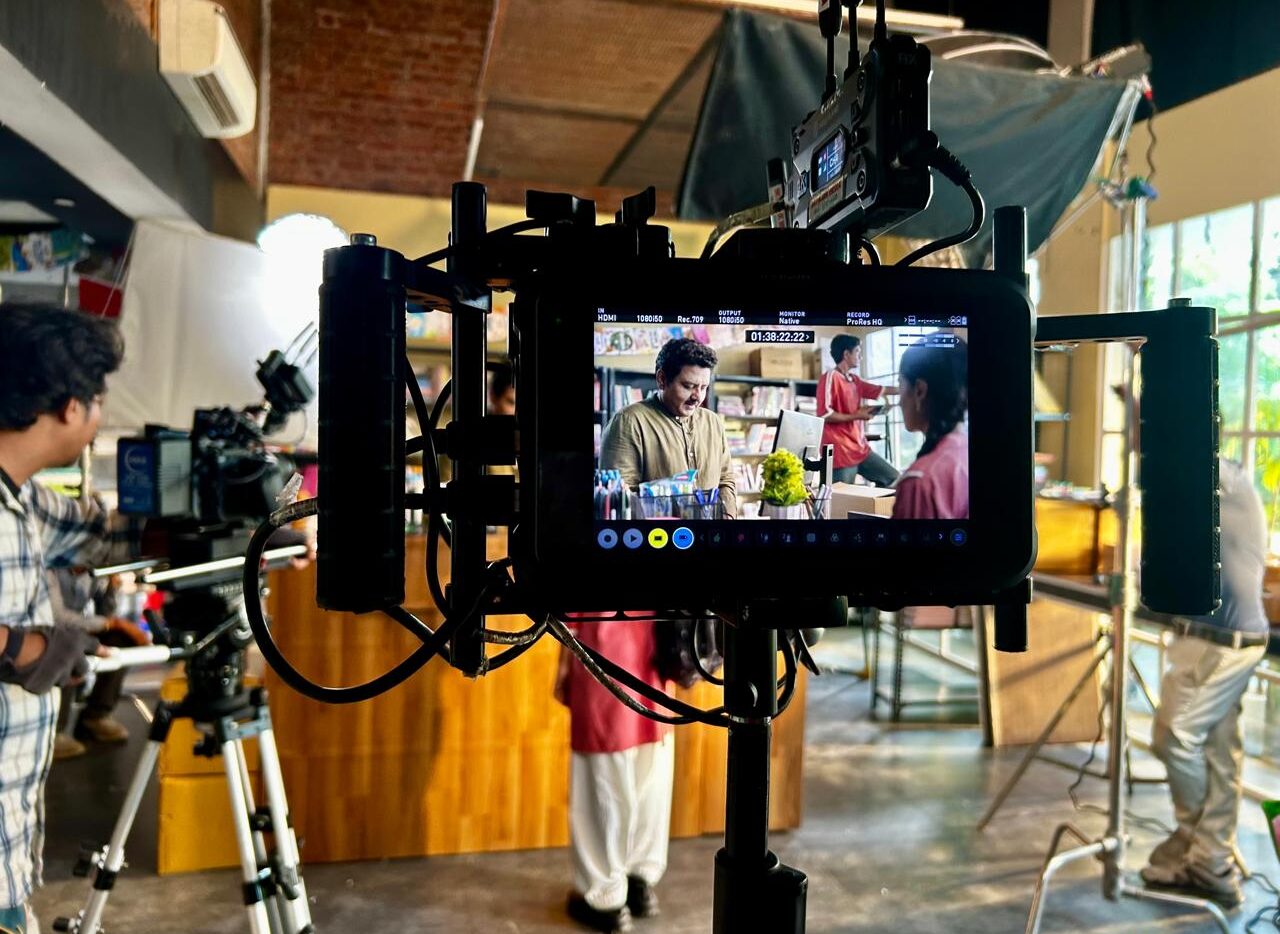
A 20-second ad shoot can take an entire day. Behind that polished commercial video are hours of preparation, lighting adjustments, camera setups, rehearsals, multiple takes and coordination between creative and production teams.
For brands investing in video ad, the shoot is where a creative idea has to work in the real world. The product needs to look right. Talent needs to deliver the right performance. Lighting needs to complement the visual direction. Every camera angle and movement needs to serve the concept.
At FlowInk Pictures, a video production company working across corporate, advertising, healthcare, finance, technology, retail and other sectors, an ad shoot brings these moving parts together through planned production and on-set execution.
But what actually happens once the crew reaches the set?
From the first setup to the final take, here is a closer look at what happens behind the camera during a professional commercial shoot.
Before the Camera Rolls: The Set Starts Taking Shape
The first activity on set is rarely “action.”
By the time the camera is ready, several departments may already have been working for hours. Equipment is unloaded and prepared. Lighting positions are worked out. Props and products are placed. The set is checked against the creative requirements. Talent gets ready with hair, makeup and costumes.
At the same time, the production team reviews the day’s schedule and confirms the planned setups.
This is where the work done during pre-production starts paying off. A script or storyboard may show what needs to happen, but the shoot requires that idea to be translated into a physical space with real people, equipment and time constraints.
For ad production, this preparation is critical. A clear plan helps the team understand what needs to be captured, which setups are essential and how the available shooting time should be used.
A well-prepared set gives the director and crew room to focus on execution instead of solving problems that could have been anticipated earlier.
The Director Turns the Concept Into Action
Once the set is ready, the director begins working through the creative execution.
A storyboard can show where an actor needs to be and what the camera should capture. On set, however, those ideas have to become actual movement, performance and timing.
The director works with talent on expressions, gestures, delivery and movement while coordinating with the cinematographer on how the action will appear within the frame.
A product may need to enter at a precise moment. An actor may need to hit a specific mark. A camera move may need to finish at exactly the right position.
These details can seem insignificant when watching the final advertisement. During commercial video production, they can determine whether a shot works or needs to be repeated.
Blocking: Finding the Movement Before the Take
Before the camera rolls, the team may rehearse the scene through blocking.
Blocking establishes where talent moves, where they stop, where they look and how their movement interacts with the camera and other elements in the scene.
Imagine a simple shot of someone picking up a product from a table.
The movement needs to look natural. The product needs to remain visible. The actor needs to land in the right position. The camera needs to maintain the intended composition. Focus needs to follow the action.
If one of those elements changes, the setup may need to change with it.
That is why a few seconds of screen time can require considerably more preparation than the audience might expect.
Lighting: What Happens Outside the Frame
Lighting is one of the most carefully controlled parts of a commercial production.
It is not just about making the scene visible. Lighting influences how the product, talent, location and overall visual environment appear on screen.
For a product video, the lighting may be designed to reveal texture, shape, colour or finish.
For a lifestyle commercial, it may be shaped to create a natural environment while maintaining a polished, cinematic look.
Lights are positioned and adjusted around the camera’s perspective. Once the camera angle changes, the lighting may need to be changed too.
The audience sees the finished frame.
The lighting team is constantly thinking about everything happening just outside it.
Camera Setup: More Than Finding the Right Angle
The camera team now works on translating the creative direction into the actual image.
Lens choice, framing, focus, exposure, depth and camera movement all influence the final shot.
A close-up of a product requires a different approach from a wide shot showing an entire environment. A fast-paced advertisement may call for controlled camera movement, while another concept may work better with a locked-off composition.
The camera is therefore not simply recording what is happening.
It is helping determine how the audience experiences the moment.
That requires close coordination between the director and cinematographer, as well as constant attention to what is happening inside the frame.
Then Comes “Action!” on an Ad Shoot
This is the part most people imagine when they think about an ad shoot.
The set goes quiet.
The director calls for the take.
Talent performs.
The camera rolls.
And then:
“Cut.”
But that does not necessarily mean the shot is done.
The director may want another performance. The camera may need a slight adjustment. The product placement may not be perfect. The timing may feel different from what was imagined during rehearsal.
So the crew resets.
And they go again.
Sometimes the final version is the first take. Often, it is not.
Why One Shot Can Take Several Takes
Multiple takes are not necessarily a sign that something has gone wrong.
They can be part of getting the right options.
The director may want a different performance. The cinematographer may want another camera movement. The editor may benefit from a wider shot, a closer angle or an alternate reaction.
There are also technical reasons for repeating a take.
A focus pull may not land correctly. A product may move slightly. An actor may miss a mark. Something in the background may change.
When the final video needs to be precise, small details matter.
So the set resets, the team checks the setup again and the camera rolls.
Between Takes, the Set Is Still Working
A professional shoot is not simply a series of “action” and “cut” moments.
A large part of the day happens between them.
The camera may be moved to a new position. Lighting may be reshaped. Props may be changed. Talent may need a costume or makeup adjustment. The production team may prepare the next setup while another department finishes the current one.
This is where production coordination becomes critical.
The more locations, products, talent and setups a project involves, the more important it becomes to keep every department aligned with the schedule.
A few minutes saved on one setup can make a meaningful difference by the end of a long shooting day.
Where Does the Client Fit In?
For many commercial productions, the brand team is involved in reviewing the work as it is captured.
They may check product presentation, messaging, brand requirements and the overall direction of the shot.
This collaboration can be particularly useful because certain details may be obvious to the brand but less visible to someone seeing the product for the first time.
The smoother this communication is, the easier it becomes to keep production aligned with the original objective.
That is another reason pre-production matters. When the brief, script, storyboard and creative direction are aligned before the shoot, the set can concentrate on bringing that approved direction to life.
The Shoot Wraps, But the Video Isn’t Finished
When the final shot is captured, the production phase ends. The video itself is still being created.
The footage moves into post-production, where the team works through the recorded material and begins building the final edit.
The process can include:
- Selecting the strongest takes
- Editing the sequence
- Refining pacing
- Colour grading
- Sound design
- Music
- Graphics or titles
- Final finishing and delivery
The editor may have several versions of the same shot to choose from. A take that looked good on set may not work as well within the complete sequence.
Post-production therefore continues the decisions that began during pre-production and production.
For a video production company, this continuity matters. The creative direction established before the shoot should continue through the edit rather than changing once the footage reaches post-production.
What You See in One Minute Can Take Hours to Create
One thing becomes particularly clear when you spend time on a professional video shoot: the final video can look completely different from the process behind it.
On screen, a one-minute video may feel effortless. Behind the camera, however, that one minute can take hours to create.
The set is prepared before the shoot begins. Lights are positioned and adjusted. Cameras are set up and tested. The frame is checked. Talent is prepared. Props and products are positioned. Every element within the shot has to work together.
And then the shooting begins.
A shot may be repeated several times to get the right performance, camera movement, expression, timing, lighting or framing. Sometimes, even a small detail means resetting the shot and doing it again.
What looks like a simple scene on screen can involve a surprisingly detailed production process behind it.
Being on set makes one thing particularly clear: professional video production is built on precision and patience.
The final one-minute video does not show the hours spent preparing the set, adjusting the lights, checking the camera, repeating takes, reviewing footage and making small corrections.
The audience sees the finished minute. The production team creates everything that makes that minute work.
That perspective changes the way you look at a professional corporate video or advertisement. It is not simply the result of pressing record. It is the outcome of planning, coordination, technical expertise, creative decisions and repeated attention to detail.
The quality of the final video depends on everything that happens before, during and after the camera rolls.
What Should Businesses Look for in a Video Production Partner?
A production partner should bring more than cameras and a crew to the set.
The right video production partner should understand what the video needs to achieve, translate the creative idea into a practical production plan, anticipate challenges and manage the ad shoot without losing sight of the final objective.
Before choosing a partner for commercial video production, businesses should ask:
- Does the team understand the business objective behind the video?
- How clearly does it approach scripting and pre-production?
- Can it manage the creative and technical requirements of the ad shoot?
- How does it handle multiple setups, locations or talent?
- How closely will the client be involved during production?
- What happens after the ad shoot?
- Can the same production vision be maintained through editing and final delivery?
These questions shift the focus from equipment alone to the overall production process.
At FlowInk Pictures, the process begins with understanding the brief and developing the creative direction before moving into scripting, pre-production, production and post-production.
The objective is to make every stage work towards the same final video rather than treating the ad shoot as an isolated activity.
Behind Every Short Advertisement Is a Much Longer Process
The next time you watch a polished advertisement, look beyond the final frame.
Think about the lighting that had to be positioned, the camera angle that had to be tested, the talent that had to hit the right mark and the takes that may have been repeated before the final version was approved.
A 15 or 30-second advertisement is short in duration. Producing it well is not.
The audience sees the finished seconds. The production team creates everything that makes those seconds work.
And that is what really happens on an ad shoot.
Planning an Ad shoot for Your Brand?
FlowInk Pictures provides end-to-end video production for brands across advertising, corporate, healthcare, finance, technology, retail and other sectors, covering creative development, scripting, pre-production, production and post-production.
The goal is simple: bring the creative idea to the screen with the planning, precision and production expertise it deserves.
FlowInk Pictures
Website: www.flowinkpictures.com
Email: [email protected]
Call / WhatsApp: +91 9810755228 | +91 9625500791