
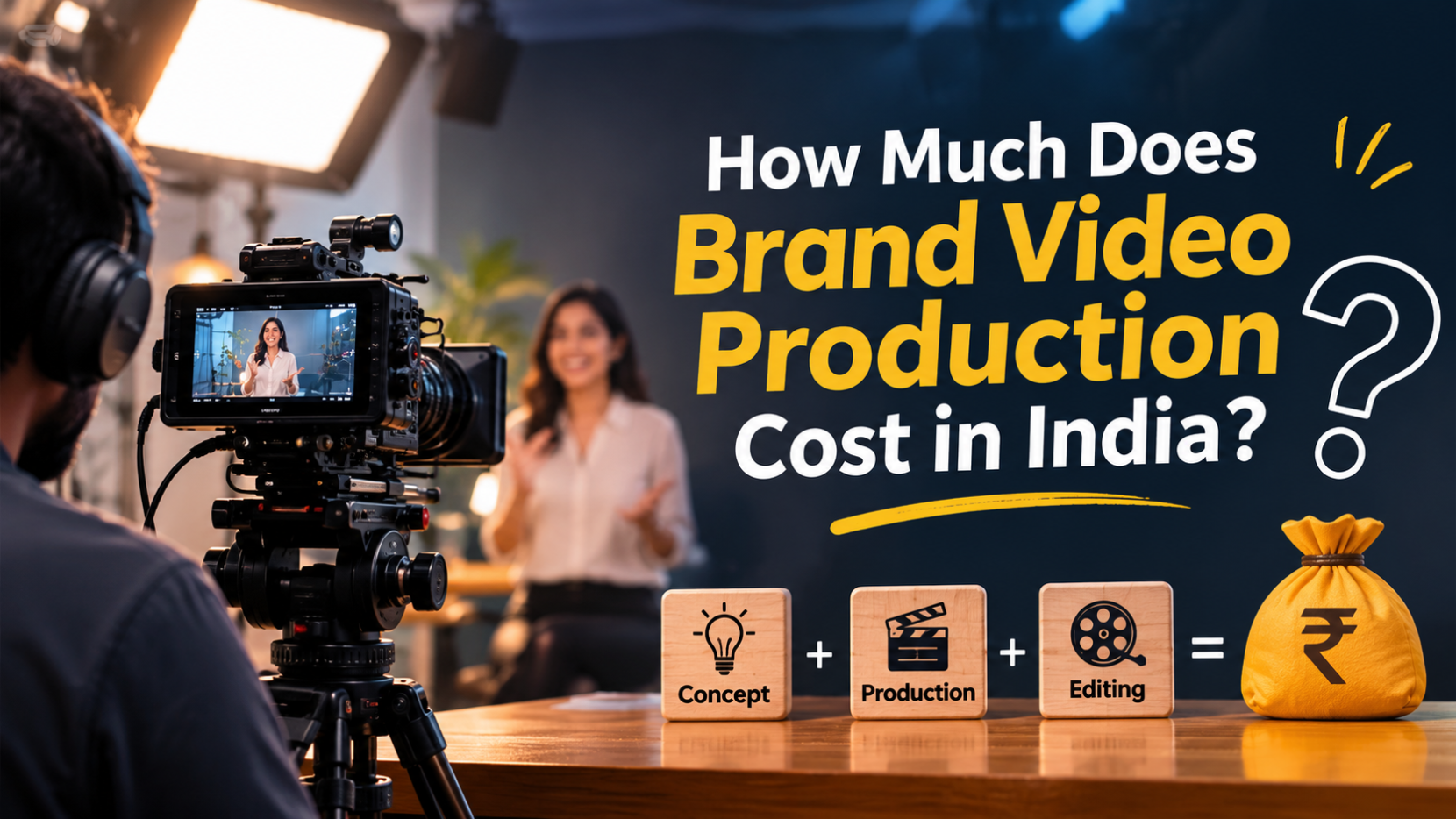
A brand video can help a business communicate its identity, values, expertise and purpose through video. The cost of producing one in India depends on the creative concept, filming requirements, locations, people involved, post-production and intended use of the final video. Each project has a different scope, which influences the resources and planning required.
Two businesses may request a brand video of the same duration and receive very different quotations. One project might focus on leadership interviews and workplace footage, while another may involve actors, multiple locations, detailed art direction and carefully planned scenes. Both may communicate a company’s identity, but their production requirements differ considerably.
The production partner also matters. Creative development, project planning, crew structure, equipment and post-production services can vary between companies.
For businesses planning a brand video, understanding these factors makes it easier to assess quotations and allocate resources effectively. This guide explains what influences brand video production costs in India, what a production quotation should cover and how to evaluate the value of the finished video.
What Determines Brand Video Production Cost in India?
The cost of a brand video is closely linked to the work required to execute the concept. Understanding the main production factors helps businesses make informed decisions before finalising a brief.
1. Creative Development and Scriptwriting
Every brand video begins with a communication objective. A company may want to introduce its business, communicate its values, present its capabilities or strengthen its market positioning. The creative approach depends on what the video needs to communicate and whom it needs to reach.
Creative development may involve research, concept development, scripting, visual references and treatment planning. A straightforward interview-led video may require a different level of development from a concept built around actors, planned scenes and a detailed visual narrative.
A clear brief helps align creative decisions with the business objective and establishes the production scope early.
2. Production Planning, Crew and Equipment
The filming approach influences the resources needed on set. Interviews, workplace footage, product demonstrations and scripted scenes require different combinations of crew members, equipment and production coordination.
The number of shoot days, lighting requirements, camera setup, sound recording and complexity of the planned scenes can also affect the scope.
For example, a brand video covering several departments across different locations may require more coordination and filming time than a production centred on one office or facility.
3. Locations, Talent and Production Design
Location requirements can significantly influence production planning. Filming at an existing workplace may offer a practical setting for communicating company operations, while a concept that requires several locations may involve additional permissions, travel and coordination.
Projects may also require professional actors, voice-over artists, presenters or other on-camera participants. Wardrobe, props, set preparation and art direction can add further requirements when the concept calls for them.
These elements should be considered during pre-production rather than introduced unexpectedly once filming is underway.
4. Editing and Post-Production
The work continues after filming. Post-production may include footage selection, editing, colour correction, sound mixing, music, graphics, subtitles and voice-over integration.
The complexity of the edit depends on the creative treatment and the amount of material captured. A straightforward interview-based video may need a different editing process from a concept involving multiple scenes, layered graphics and carefully coordinated sound.
The production brief should also clarify whether the final deliverables include different aspect ratios, shorter edits or versions for specific platforms.
5. Deliverables, Formats and Usage Rights
The intended use of a brand video should influence its production plan from the beginning.
A company may need one main video for its website, while another may require additional versions for social media, presentations, events or digital campaigns. These requirements can affect filming decisions, editing time, graphics and the final delivery process.
Usage rights for music, stock footage, talent and other licensed materials should also be clarified where applicable. Understanding these requirements early helps avoid confusion about what the agreed production scope includes.
What Should You Compare in a Brand Video Production Quote?
A production quotation is most useful when it explains the work included, the resources allocated and the deliverables the client will receive. Comparing only the final quoted amount can leave important differences in scope unnoticed.
Before selecting a production company, review the following:
- Creative development: Does the proposal include concept development, scripting and a defined creative treatment, or is the client expected to supply these?
- Production resources: What crew, equipment, shoot days and production coordination are included?
- Locations and talent: Are location expenses, permissions, actors, presenters and voice-over artists covered where required?
- Post-production: Does the quotation specify editing, sound, colour correction, graphics, subtitles and music requirements?
- Deliverables: How many final videos, cutdowns, aspect ratios and language versions are included?
- Revisions and approvals: How many revision rounds are covered, and how will additional changes be handled?
- Usage rights: Are the relevant licensing and usage terms clearly explained?
- Additional expenses: Are travel, accommodation, location charges, taxes and other applicable expenses included or billed separately?
A lower quotation may cover a narrower scope, while a higher quotation may include additional creative development, production resources or deliverables. Neither amount tells the full story on its own.
Ask each production company to quote against the same brief wherever possible. This creates a more meaningful comparison and helps you understand what each proposal offers.
How to Plan a Brand Video Budget Effectively
A well-defined brief gives a production company the information needed to recommend a suitable creative and production approach. These steps can help businesses plan more confidently.
Define the Business Objective
Start by identifying what the video needs to achieve. Is the priority to introduce the company, communicate its capabilities, support sales conversations, present its workplace culture or strengthen brand recognition?
The objective helps determine the content, format and intended audience.
Establish the Creative Direction
Decide what the video needs to communicate and how it should present the business. Leadership interviews, workplace footage, customer perspectives and scripted scenes are different creative options, each suited to particular communication needs.
The production partner can then recommend an approach that fits the brief.
Separate Essential Requirements from Optional Additions
Identify the elements necessary to achieve the objective, then distinguish them from enhancements that can be considered separately.
For example, multiple locations may be essential to demonstrate a company’s operations, while an additional location may offer limited value if it does not strengthen the intended message. This distinction helps keep the production scope purposeful.
Confirm Deliverables Before Filming
Discuss where the film will be used and whether additional versions are needed. If the business requires both a main brand video and shorter edits for digital campaigns, planning for these formats before filming can help the team capture suitable footage.
Changes made after production has begun may require additional filming or editing, depending on the original scope.
How Should You Evaluate the Value of a Brand Video?
The value of a brand video depends on how well it serves its intended business purpose. Production quality matters, but the creative approach should also support the communication objective, audience and distribution plan.
A company introducing its capabilities to prospective clients may need a film that presents its expertise and operations clearly. A business communicating its workplace culture may need a different approach that gives viewers a more meaningful understanding of the people and working environment.
Before production begins, identify how the video will be used and what a successful outcome would look like. Depending on the objective, evaluation may consider relevant audience engagement, qualified enquiries, video completion, use by sales teams or its contribution to a wider marketing campaign.
These measures should reflect the purpose of the video rather than rely on views alone.
A well-planned brand video also needs a clear role within the company’s broader communication efforts. When the concept, production scope and distribution plan work together, the finished video has a stronger foundation for delivering business value.
How FlowInk Pictures Approaches Brand Video Production
At FlowInk Pictures, brand video production begins with understanding the business, its communication needs and the audience it wants to reach. These inputs guide the creative concept, visual approach and production plan.
The process connects creative development with practical production requirements. Scriptwriting, locations, filming resources, post-production and final deliverables are considered in relation to the brief, helping businesses understand the scope of their project before production begins.
As a video production company serving businesses in Gurgaon and Delhi NCR, FlowInk Pictures works across brand videos, corporate videos, advertising videos, product videos and digital campaign content. The appropriate format depends on the communication objective and the intended use of the video.
For businesses evaluating brand video production companies, a useful starting point is to discuss the objective, audience, creative direction and expected deliverables. This allows the production team to understand the requirements and develop a proposal aligned with the project.
Planning a brand video for your business?
Discuss your objectives and production requirements with FlowInk Pictures.
Call or WhatsApp: +91 9810755228 | +91 9625500791
Website: https://www.flowinkpictures.com/
Email: [email protected]
Frequently Asked Questions About Brand Film Production
What factors affect brand film production costs in India?
The main factors include creative development, scriptwriting, crew and equipment, shoot duration, locations, talent, production design, post-production, deliverables and usage rights. The combination of these requirements determines the overall project scope.
Does the duration of a brand film determine its cost?
Duration is one consideration, but it does not determine the full production cost. Two videos of equal length can require very different levels of planning, filming and editing, depending on their concepts and execution.
What should a brand film production quotation include?
A quotation should clearly explain the creative services, production resources, shoot days, post-production, final deliverables, revision terms, usage rights and any additional expenses. This helps businesses compare proposals on a like-for-like basis.
Can I request a brand film quotation without a fixed budget?
Yes. You can begin with your business objective, audience, creative requirements and expected deliverables. Sharing a budget range can help the production company recommend an appropriate scope, but a clear brief is an important starting point.
How long does brand film production take?
The timeline depends on the concept, approvals, scheduling, filming requirements and post-production complexity. A project involving several locations or multiple approval stages may require more time than a straightforward production. Discuss the expected timeline and approval milestones before confirming the production schedule.
How do I choose the right brand film production company?
Review the company’s relevant work, creative approach, production capabilities, communication process and quotation details. Look for a partner that understands your business objective and can explain how its proposed concept, production plan and deliverables address your requirements.