
A new automotive feature can take months of engineering to develop, but the customer may have only a few seconds to understand what it actually does.
That is where an automotive technology video can make a difference.
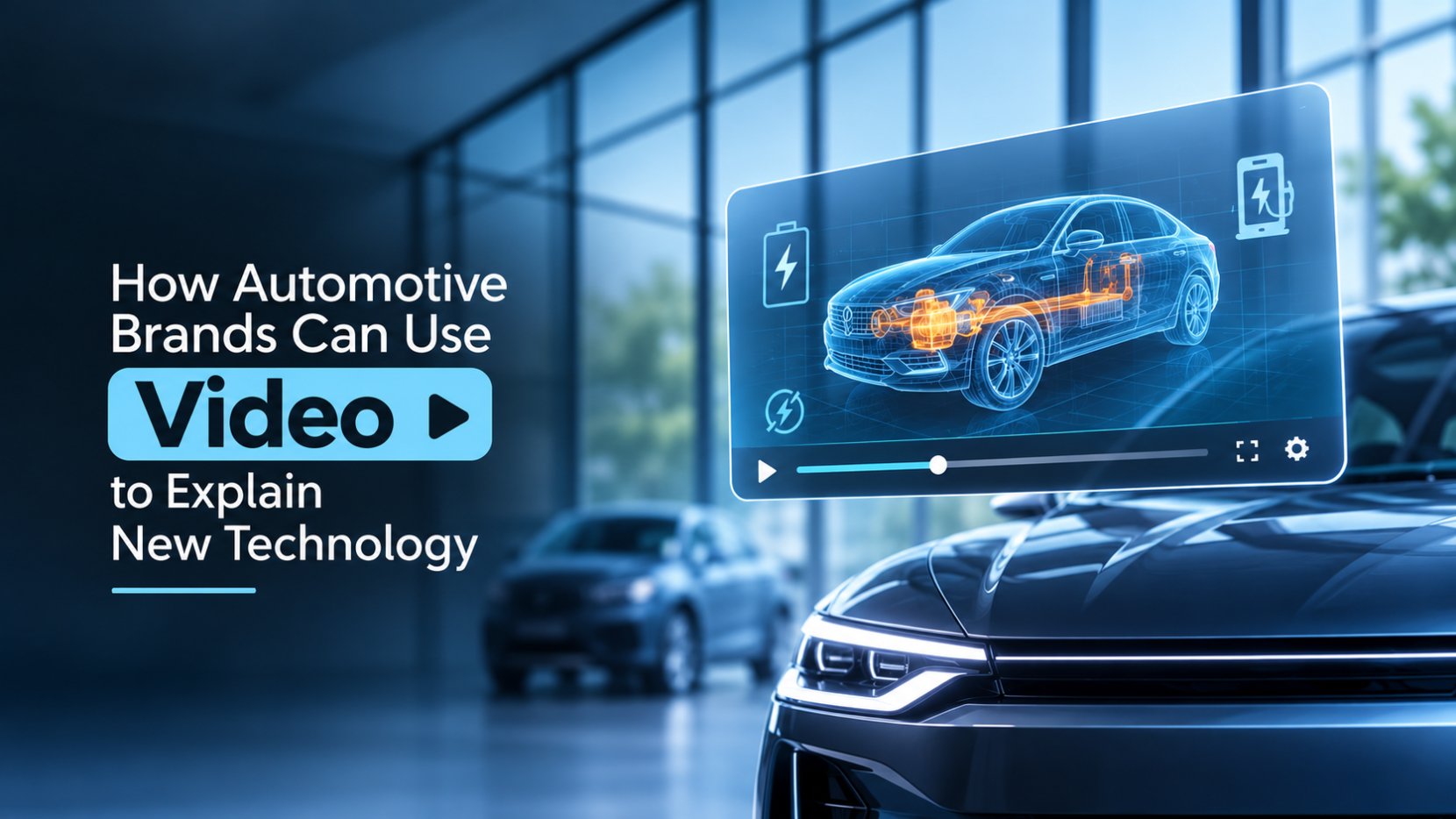
Features such as ADAS, connected-car systems, AI-enabled functions, EV technology and software-driven vehicle features often involve processes that are difficult to communicate through specifications alone. Video can show the feature in use, visualise what happens behind the scenes and connect the technology to a real driving situation.
For automotive brands, this creates opportunities across automotive product videos, animated explainers, advertising videos, feature demonstrations and social media content. The format can change depending on what the audience needs to understand.
Why Automotive Technology Needs Video
A specification sheet can tell a customer that a vehicle has a particular feature. A video can show what that feature actually means in practice.
Consider a driver-assistance feature. A brochure might describe how the system detects a vehicle or lane marking. A video can show the driving situation, demonstrate the vehicle’s response and use graphics to explain what is happening.
The same principle applies to connected-car technology.
Instead of simply listing remote vehicle functions, a video can show the driver using an app, the command reaching the vehicle and the vehicle responding.
This makes the technology easier to understand because the audience can see the feature operating in context.
As vehicles become increasingly connected and software-driven, automotive technology now includes physical components, sensors, interfaces, software and digital services. Each can require a different visual treatment.
ADAS Is a Strong Use Case for Automotive Video
Advanced Driver Assistance Systems are particularly suited to visual communication.
Features such as:
- Automatic Emergency Braking
- Lane Keeping Assistance
- Adaptive Cruise Control
- Blind Spot Detection
- Forward Collision Warning
- Driver Monitoring Systems
involve road conditions, sensors, vehicle responses and driver interaction.
An ADAS video can use live-action footage to establish the driving situation and motion graphics to highlight detection zones, lane markings or the vehicle’s response.
This combination allows the viewer to understand both the experience and the technology behind it.
For a technology that depends on timing and context, showing the sequence can often communicate more effectively than describing it in text.
Connected-Car Technology Needs Demonstration
Connected-car features often involve more than the vehicle itself.
The experience may move through a sequence such as:
Driver → Mobile App → Connected Platform → Vehicle → Driver Response
Video can make that sequence easy to follow.
Take a remote vehicle function. A product video can show the driver’s action on the app, transition to the vehicle responding and then return to the driver’s experience.
Screen recordings, live-action footage and motion graphics can work together to explain the complete interaction.
The same production can also generate shorter feature demonstrations for websites, social media and customer communication.
EV Technology Is Made for Animation
Electric vehicle technology presents a different visual challenge.
A camera can show an EV charging, but it cannot directly show energy moving through the vehicle or explain what is happening inside its battery and thermal management systems.
That is where 2D animation and motion graphics can add clarity.
An automotive explainer video can visualise:
- Energy flow during driving
- Regenerative braking
- Battery management
- Charging systems
- Thermal management
- Drive modes
- Software-controlled functions
The distinction is simple:
Live action shows the vehicle.
Animation explains the system.
The right combination depends on what the audience needs to understand.
AI and Vehicle Software Require a Different Visual Approach
AI-enabled automotive features can be even harder to demonstrate because much of the process happens digitally.
The viewer may see an alert, recommendation or vehicle response without seeing how the system reached that result.
Video can make this process more understandable by visualising:
Input → System Processing → Vehicle Response → Driver Outcome
Motion graphics can represent the information being processed, while live action can demonstrate what the driver actually experiences.
The objective is not to turn the video into a technical presentation. It is to give the audience enough visual context to understand what the technology does and why it matters.
Why the Format Should Follow the Objective
For technology-heavy subjects, the visual approach needs to match what the audience needs to understand.
Some automotive features are best demonstrated through live action, while others require animation, motion graphics or a combination of formats. The choice depends on whether the video needs to demonstrate a feature, explain a process, show a user experience or communicate a message quickly.
FlowInk’s Automotive Technology Explainer for Spyne is an example of how animation can be used to communicate automotive technology that is difficult to demonstrate through conventional live action.
The principle is straightforward: the automotive category may remain the same, but the video format should be selected according to the communication objective.
Product Video, Explainer or Advertising Video?
Automotive brands can use different formats depending on the job the video needs to perform.
Automotive Product Video
A product video works well when the audience needs to see the vehicle or a particular feature.
Live-action footage, close-ups, feature demonstrations and motion graphics can work together to present the product clearly.
2D Animated Explainer Video
Animation is useful when the subject involves systems or processes that cannot be captured effectively with a camera.
This can include EV energy flow, sensors, software processes and technical workflows.
Live-Action Automotive Video
Live action is valuable when the audience needs to see a feature operating in a realistic environment.
Driving assistance, vehicle controls, design features and customer interactions can benefit from real-world demonstration.
Advertising Video
An advertising video has a different priority. It connects the technology or product to a customer need, campaign idea or brand proposition.
The message needs to be clear quickly, particularly when the content is designed for digital advertising.
Social Media Video
A technology launch can also be broken into shorter videos, with each asset focused on one feature, benefit or customer question.
This allows brands to adapt the same technology communication for different digital platforms.
One Technology Can Become Multiple Video Assets
A new automotive technology does not necessarily need to live inside one long video.
A single launch can generate:
- A detailed product video for the website
- A 2D animated section explaining the technology
- Short social media videos
- A feature-focused advertising video
- A customer how-to video
- Sales and dealership presentation content
Planning this content ecosystem early can help brands get more value from the same production.
It also allows the visual language, product footage, graphics and technical information to remain consistent across different formats.
The Production Format Should Follow the Technology
The format should be considered before production begins.
| Automotive requirement | Suitable production approach |
| Vehicle design and physical features | Live-action product video |
| Driving experience | Live-action automotive video |
| ADAS demonstration | Live action + motion graphics |
| Sensor and detection systems | 2D animation + graphics |
| EV energy flow | 2D animation |
| Connected-car application | Screen recording + live action |
| Software features | UI demonstration + motion graphics |
| Technology launch | Product video + advertising treatment |
| Social campaign | Short-form automotive video |
This is where an experienced automotive video production company can add value before the camera is switched on.
The production team needs to understand the communication requirement, identify what the viewer needs to see and select the visual approach that explains it most effectively.
How FlowInk Approaches Automotive Technology Videos
At FlowInk Pictures, the production approach starts with the communication objective.
Live action can establish the vehicle, environment and real-world experience. 2D animation and motion graphics can visualise systems that cannot be captured directly. Product videos can focus attention on specific features, while advertising and social formats can communicate a focused message across digital platforms.
FlowInk’s portfolio includes automotive technology explainers, product-focused videos, advertising content, Meta ads and animated videos.
The advantage is not simply having different production capabilities. It is knowing which capability should solve which communication problem.
The Best Automotive Technology Videos Answer One Clear Question
Strong technology communication usually begins with a clear question.
It could be:
How does this feature work?
What happens when I use it?
Why is this technology useful?
What does the driver need to know?
How is this vehicle different?
Once that question is clear, the production approach becomes easier to define.
The answer could be a live-action automotive video, a 2D animated explainer, a product demonstration, an advertising video or a series of short social assets.
The technology may be complex behind the scenes. The communication should not be.
A well-planned automotive technology video gives the audience something a specification sheet cannot: a visual understanding of what the technology does, when it matters and how it fits into the driving experience.
Planning an Automotive Technology Video?
FlowInk Pictures creates automotive video content, product videos, animated explainers, advertising videos and social media assets designed around the technology, audience and communication objective.
Call / WhatsApp: +91 9810755228 | +91 9625500791
Website: www.flowinkpictures.com
Email: [email protected]